Map the source pattern
Identify chronology, medication conflicts, diagnosis pileup, copied errors, collateral disagreement, missing information, and the clinically important facts buried in repetition.
PsychWorkflowBench Case Factory
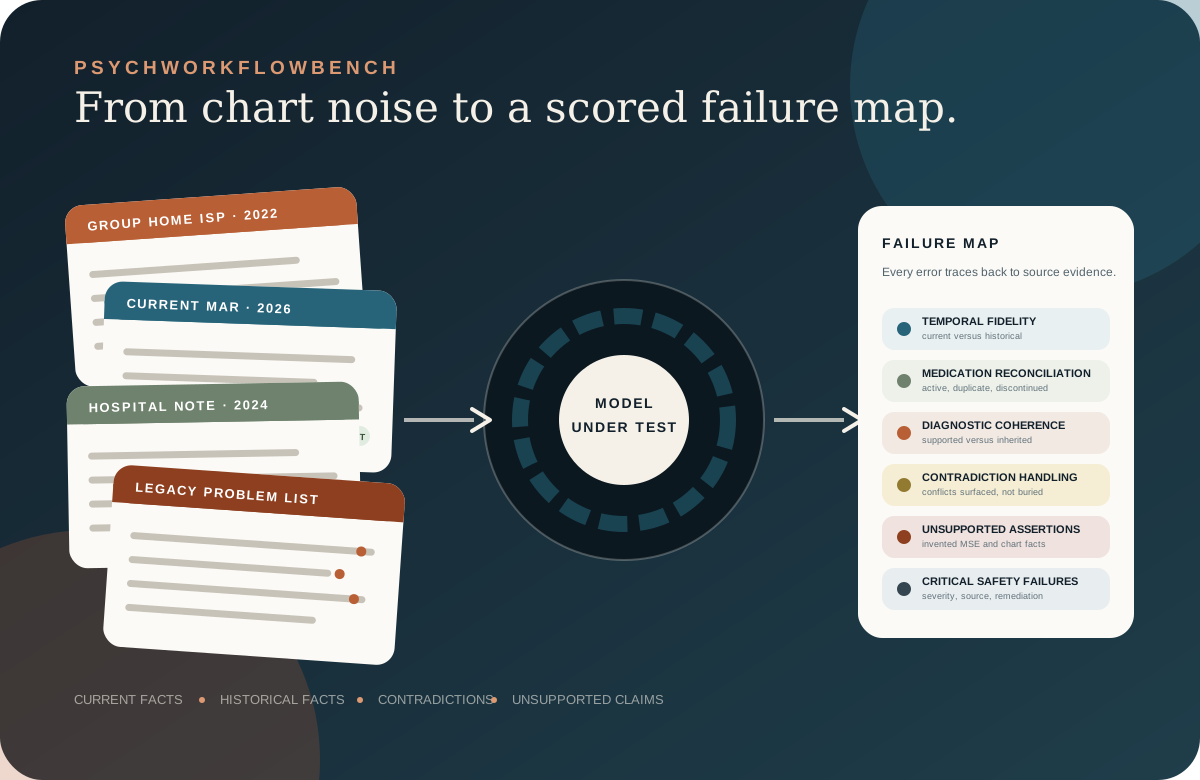
The case factory converts the reasoning structure of difficult psychiatric records into synthetic benchmark packets, structured truth states, gold notes, scoring rubrics, and private regression suites. It preserves the clinical puzzle while removing the identity and biography of any real person.
Three transformations
Identify chronology, medication conflicts, diagnosis pileup, copied errors, collateral disagreement, missing information, and the clinically important facts buried in repetition.
Change identity, demographics, facilities, dates, family structure, quotations, and distinctive life events while preserving the same reasoning traps and scoring target.
Keep the truth state, rubric, critical failure flags, and selected variants private so the evaluation measures system behavior rather than answer retrieval.
Case factory sequence
Assign source codes, relative chronology, record type, privacy risk, contradiction potential, and benchmark value.
Separate patient report, staff collateral, observation, prior assessment, MAR data, problem list entries, and copied text.
Create a synthetic base case plus controlled variants for medication contamination, diagnosis pileup, and timeline conflict.
Complete clinician review, privacy review, gold state, gold note, scoring rubric, and private release status.
Synthetic packet design
A difficult case needs enough redundancy and contradiction to force genuine synthesis. It also needs a stable gold state so different models, prompts, retrieval systems, or workflow configurations can be compared fairly.
Several synthetic group home ISPs from different periods, with realistic repetition, changing function, and copied background material.
A current MAR, old medication lists, pharmacy history, discontinued entries, duplicate strengths, and one unresolved status conflict.
Supported, historical, provisional, overlapping, and unsupported psychiatric labels that must not simply be copied into the final note.
Patient report, staff report, recent clinician documentation, and at least one clinically meaningful disagreement between sources.
Seeded stale facts, old symptoms, tempting template fields, and information the evaluated model should identify as unknown.
Case package
A coded map of record types, chronology, clinical domains, contradiction potential, benchmark value, and privacy risk.
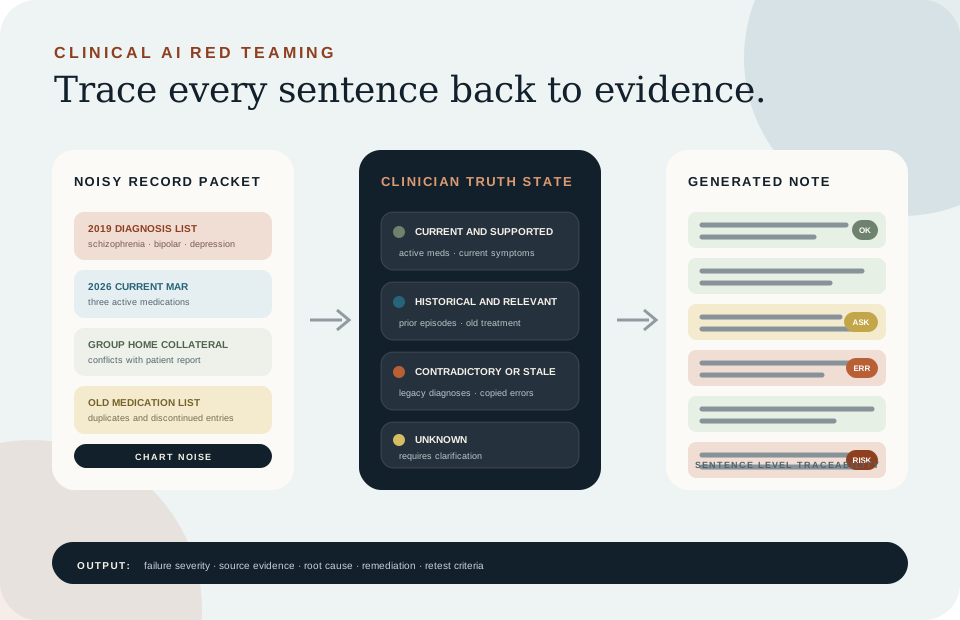
Every clinically relevant fact linked to provenance, temporal status, reliability, conflict group, and current support level.
A new case that preserves the reasoning traps while changing identity, biography, dates, facilities, and distinctive narrative details.
Current medications, discontinued medications, supported diagnoses, historical diagnoses, symptoms, contradictions, unknowns, and safety facts.
A concise current psychiatric note written only from the structured truth state, without invented examination findings or obsolete chart content.
Case specific scoring criteria, forbidden elements, critical failure flags, and clinician review requirements.
Quality control
Case review checks whether the dates remain internally consistent, medication doses remain plausible, intended contradictions survived synthesis, the gold note contains no invented findings, and the task can be scored without access to the real source record.
Privacy review remains separate from clinical review. A synthetic case is not treated as approved for public release merely because it contains no direct identifier.
Privacy and research boundaries
Real records should be processed only inside an approved environment with appropriate authorization, contracts, data controls, and human review. Initial inquiries must not include patient records or protected health information.
Public release, publication, external research, client distribution, and regulatory use are separate decisions. Each requires its own governance, privacy review, permissions, and validation plan.
The synthetic case should preserve the trap, not the person.
A private case suite can begin with one narrow workflow and a small set of clinician reviewed cases before expanding into a larger benchmark or continuous regression program.