Frontline psychiatric experience
More than 11 years across inpatient care, outpatient care, addiction treatment, telehealth, geriatric psychiatry, medication management, and clinical leadership.
Physician assistant · Clinical AI red team consultant · Allentown, Pennsylvania
Stephen McCarthy is a physician assistant with more than 11 years of psychiatric clinical experience. He evaluates behavioral health AI systems for longitudinal record synthesis, medication reconciliation, diagnostic coherence, documentation fidelity, unsupported assertions, and safety failures.

A cleaner evidence trail
More than 11 years across inpatient care, outpatient care, addiction treatment, telehealth, geriatric psychiatry, medication management, and clinical leadership.
Clinical review centered on the facts that survive or mutate as records become summaries, notes, prompts, templates, and automated workflows.
No fabricated testimonials, client outcomes, benchmark results, certifications, awards, safety guarantees, or unsupported deployment claims.
Clinical AI red teaming
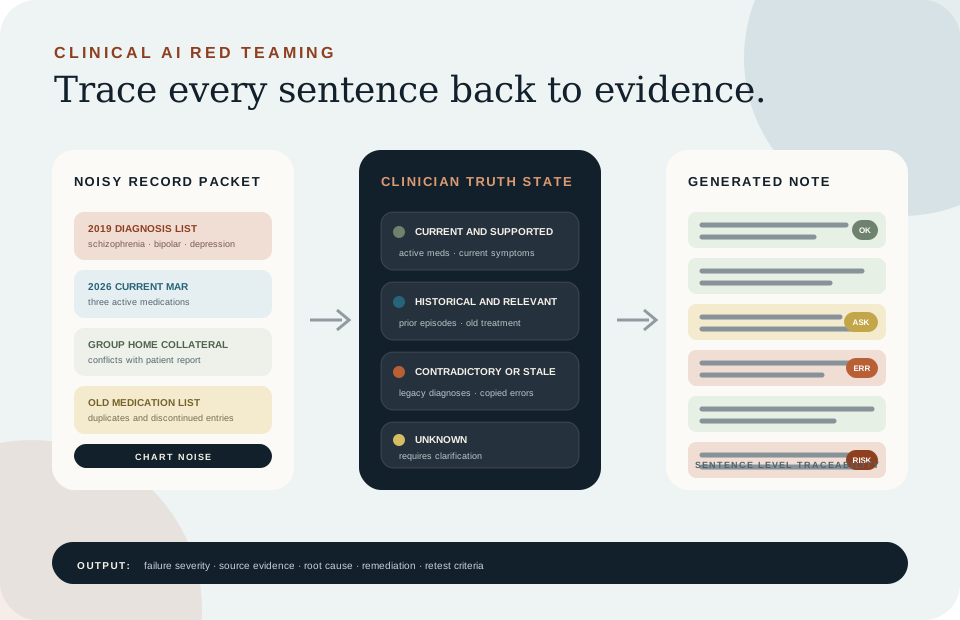
Custom evaluations use realistic longitudinal record packets and clinician authored truth states to expose stale chart propagation, medication reconciliation errors, temporal confusion, unsupported mental status findings, missing safety information, and diagnostic lists that grow without becoming coherent.
Evaluation framework
A clinician authored framework under development for testing longitudinal psychiatric record synthesis, medication reconciliation, diagnostic coherence, contradiction handling, documentation fidelity, and safety.
Explore PsychWorkflowBenchProducer briefing · August 15, 2026
A source led producer briefing on diagnostic reification, commercialized mental health language, and the difference between describing distress and claiming to explain it.
Read the producer briefingFeatured writing · July 19, 2026
A diagnosis can organize observations without explaining their cause. This essay examines AuDHD as shorthand, the difference between a syndrome and a pathogen, and the circularity that appears when a label is treated as the cause of the very symptoms used to assign it.
Read the essayA practical visual guide
Good clinical language starts by recording what is present. A category may then help organize that record, while explanation remains a separate question for evidence to answer.
See the distinction in the essay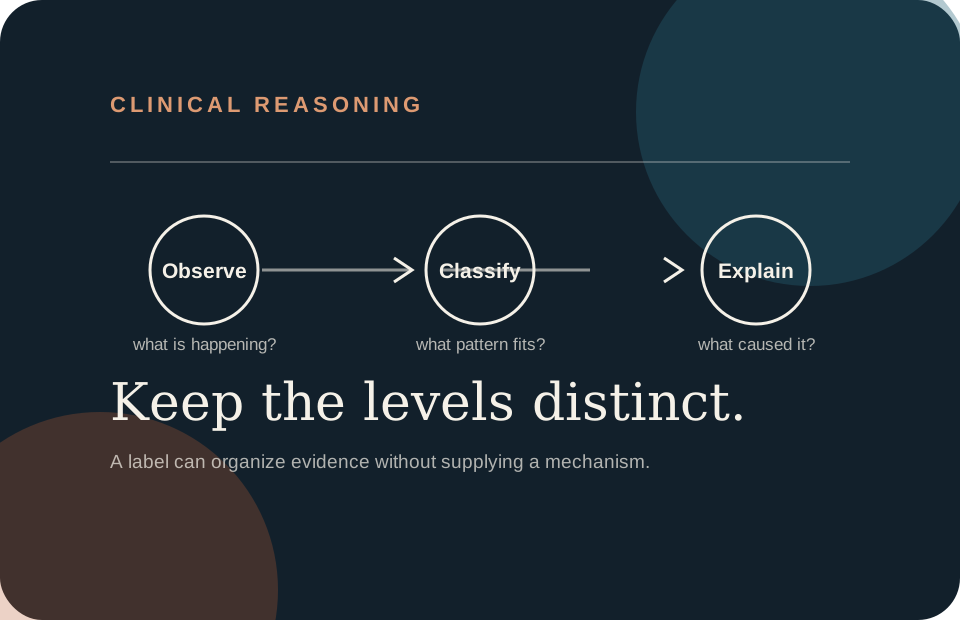
Clinical reasoning
The goal is not to deny suffering. It is to keep description, classification, and causal explanation from melting into one word.
What is happening, when does it occur, how severe is it, and what function is impaired? Those questions come before the label.
A diagnosis can help communication, access, and treatment planning without proving that it is a discrete disease entity.
Causal claims need evidence beyond the criteria used to assign the diagnosis. Otherwise the explanation simply walks in a circle.
A clinical note should be concise because the evidence has been organized, not because the difficult facts disappeared.
The same standard applies to clinical AI: preserve what matters, expose what conflicts, and never manufacture certainty to complete a template.